AMAR Model
We believe that a person's possibilities are also built through the relationships and environments they are part of. The AMAR Model is the way Fundación Amadeus understands and accompanies the development, participation and inclusion of people with intellectual disabilities. It starts from recognizing each person in their uniqueness, their history, their capacities, their relationships and the contexts that are part of their life.
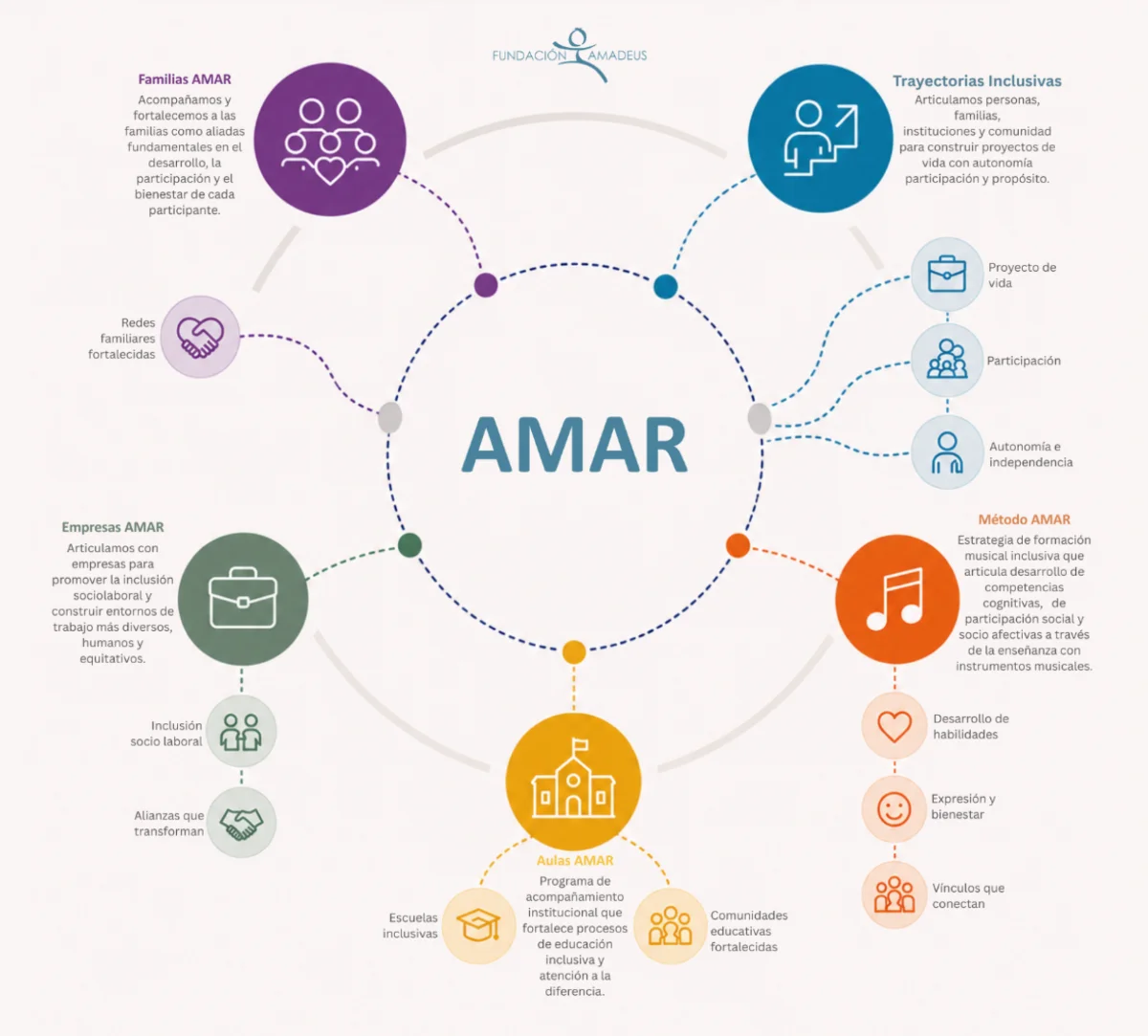
Our perspective understands development as a relational process. Family, school, learning spaces, the community and the socio-occupational world relate to one another and can open new possibilities for participation. That is why accompanying a pathway means looking at the person and, at the same time, connecting and strengthening the environments around them.
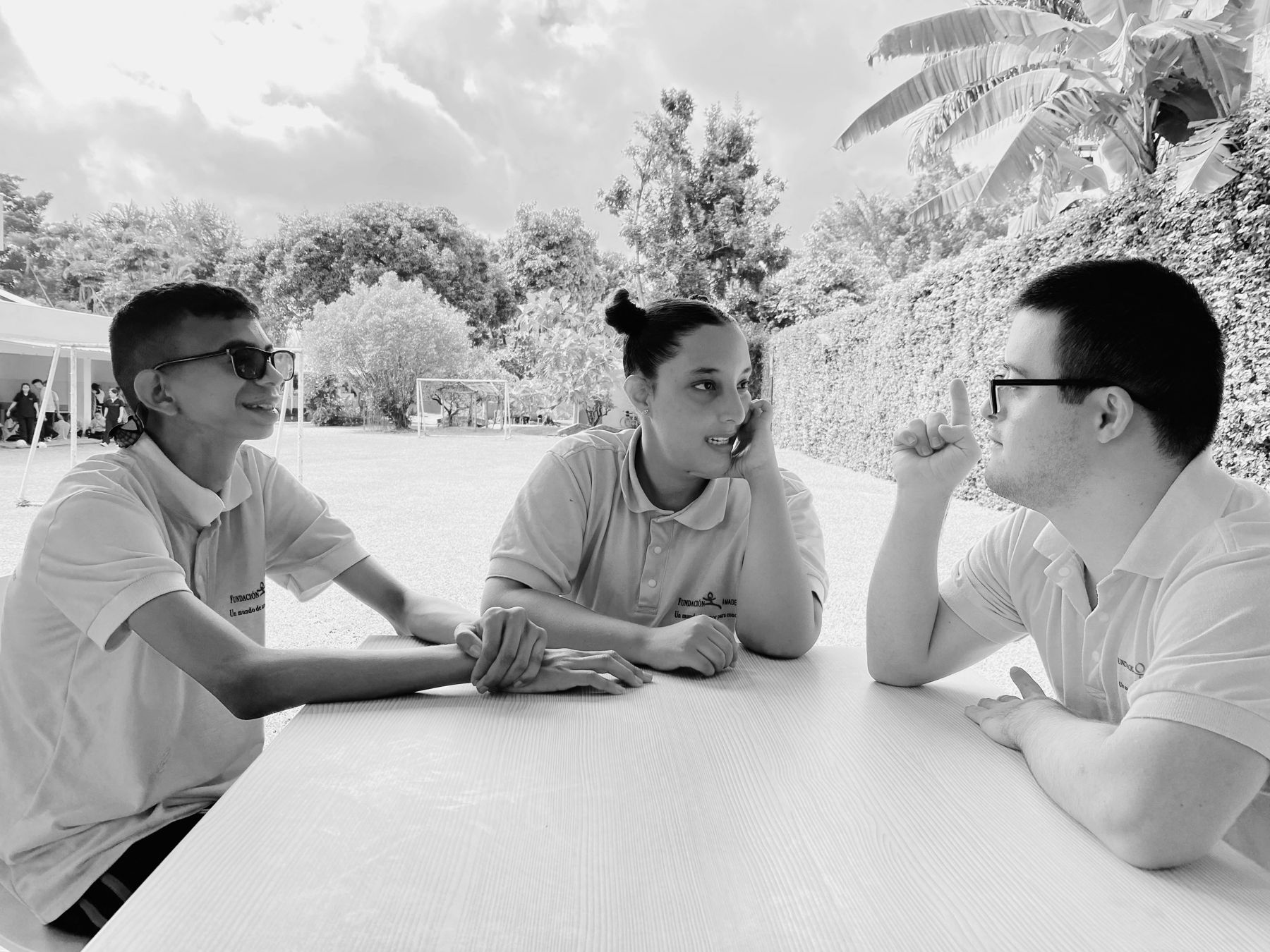
Learning also happens in relation. Each person builds knowledge from their experience, their bonds and their own ways of understanding the world. At Amadeus, accompaniment starts from that uniqueness and builds with each participant the supports, experiences and opportunities that can expand their relational world.
The person is at the center of their pathway as a subject of rights and an active participant in the decisions that are part of their life.
 The person is at the center of their pathway as a subject of rights and an active participant in the decisions that are part of their life.
From this perspective, difference is a starting point. It invites us to ask what we can transform in relationships, practices and environments so that each person can be, learn, decide, contribute and participate.
The person is at the center of their pathway as a subject of rights and an active participant in the decisions that are part of their life. Their voice, their interests and their choices guide a path that is built with them, their family and those who accompany them.
Connecting to expand possibilities
This understanding takes shape through the programs of the AMAR Model. Inclusive Pathways accompanies each participant's journey; AMAR Families strengthens families as a fundamental part of that journey; the AMAR Method opens possibilities for learning and participation through music; AMAR Classrooms accompanies educational communities; and AMAR Companies connects capacities and environments to move toward socio-occupational participation.
Each program acts on one part of that system, but all share the same purpose: connecting people, capacities, relationships and environments to expand each person's possibilities for participation.